


Most people think about water in fairly simple terms. You drink it, cook with it, maybe install a filter at home if the tap tastes strange. But in scientific, medical, and industrial environments, water becomes something entirely different. It’s no longer just a utility flowing quietly through pipes in the background. It becomes part of the process itself — something that can directly affect research accuracy, manufacturing consistency, equipment reliability, and even safety standards.
And honestly, once you start understanding how sensitive certain systems are, it makes perfect sense why water quality becomes such a serious priority.
Tiny impurities most people would never notice in everyday tap water can completely disrupt laboratory testing or damage precision equipment over time. A trace mineral here, a small amount of contamination there — suddenly results become inconsistent, systems require constant maintenance, or expensive machinery begins wearing down far earlier than expected.
That’s why advanced purification technologies have become absolutely essential across so many industries.
Water Purity Isn’t Just About Cleanliness
One thing people outside technical fields often misunderstand is that purified water isn’t simply “cleaner” water. The standards go much deeper than that.
For many scientific and industrial applications, the goal is high purity water with extremely low levels of dissolved solids, ions, organic compounds, bacteria, and particulates. In certain environments, even microscopic contaminants can interfere with sensitive processes.
Think about pharmaceutical manufacturing for a moment. Or semiconductor production. Or medical laboratories running analytical tests where precision matters down to tiny molecular variations. In those situations, ordinary filtered water simply isn’t enough.
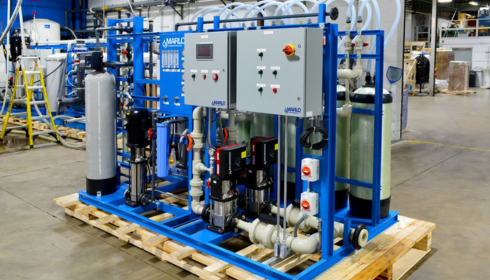
That’s why purification systems often combine multiple technologies together — reverse osmosis, deionization, UV sterilization, ultrafiltration, and specialized polishing stages designed to remove increasingly smaller impurities from the water supply.
It sounds highly technical, and honestly, it is. But the purpose remains fairly simple: consistency.
Precision Depends on Reliable Water
Scientific research depends heavily on repeatability. If results vary unpredictably, researchers can’t trust the data fully. Water contamination may seem like a small detail, but in many labs it can quietly affect everything from chemical reactions to calibration accuracy.
That’s one reason modern laboratory water systems have become so sophisticated over the years. These systems aren’t just designed to provide purified water — they’re built to maintain stable quality standards consistently day after day.
And consistency matters enormously.
Researchers don’t want to question whether fluctuating mineral content affected a sample. Medical facilities don’t want contamination risks in sterilization systems. Analytical labs need water quality reliable enough that it disappears as a variable entirely.
Ironically, the best water systems in scientific settings are often the ones nobody notices because they work so consistently in the background.
Different Industries Need Different Standards
What’s interesting is how much purification requirements vary depending on the application.
A pharmaceutical facility requires very different water standards than an automotive manufacturing plant. Electronics production often demands ultra-pure water because tiny conductive contaminants can damage delicate components. Food and beverage facilities focus heavily on taste consistency and sanitation.
Even within laboratories themselves, not every process requires identical purity levels.
Some tasks need Type I ultrapure water for analytical chemistry. Others may only require lower purification grades suitable for rinsing or general cleaning purposes. That flexibility is why many facilities invest in scalable or customizable purification systems rather than relying on one universal setup.
And honestly, water treatment has become far more specialized than many people realize. The technology behind modern purification systems continues evolving rapidly because industries keep demanding higher efficiency and tighter quality control.
Maintenance Costs Often Reveal Hidden Water Problems
One of the biggest reasons companies invest heavily in advanced purification isn’t just quality — it’s equipment protection.
Untreated or poorly treated water gradually damages systems internally through mineral buildup, corrosion, or biological contamination. Boilers lose efficiency. Pipes develop scaling. Sensitive instruments require more frequent servicing. Maintenance costs quietly rise month after month.
The frustrating part is that these problems often develop slowly enough that businesses normalize them instead of recognizing the root cause.
That’s why properly designed water treatment solutions save money long-term even when the upfront investment initially seems substantial. Cleaner water reduces strain on equipment, minimizes downtime, and helps systems operate more consistently over extended periods.
And in industries where interruptions cost thousands of dollars per hour, prevention becomes far cheaper than repairs.
Water Quality Also Shapes Product Quality
This part sometimes surprises people outside manufacturing or research fields.
Water directly influences countless products we use daily — medications, beverages, cosmetics, electronics, cleaning products, and even certain medical devices. Variations in water purity can affect taste, stability, texture, appearance, and chemical performance in ways customers may never consciously identify but still experience.
A beverage company might struggle with flavor consistency if mineral levels fluctuate. Cosmetic formulations can behave differently depending on water chemistry. Laboratory testing can produce inaccurate readings if impurities interfere with reactions.
Water becomes part of the product whether consumers realize it or not.
That’s why purification standards remain so tightly controlled across many industries. Consistency builds trust.
Even Homeowners Are Becoming More Curious About Water
Interestingly, growing awareness around water quality isn’t limited to industrial or laboratory settings anymore.
Homeowners are asking more questions too. People care more about contaminants, filtration technologies, and overall water safety than they did a decade ago. While most households obviously don’t require laboratory-grade purification, the broader interest in cleaner, better-tasting water has definitely expanded.
And honestly, that curiosity makes sense. Once people understand how much water affects equipment, products, and processes in professional settings, it naturally changes how they think about water at home too.
The Best Systems Quietly Support Everything Else
What’s fascinating about advanced water systems is how invisible they become when functioning properly.
Researchers focus on experiments instead of contamination concerns. Equipment runs smoothly. Manufacturing stays consistent. Products maintain quality standards. Daily operations continue without unnecessary interruptions.
And honestly, that’s probably the goal.
Water touches nearly every technical process in modern industries, yet most people barely think about it until something goes wrong. Investing in proper purification simply removes uncertainty from the background so everything else can perform the way it’s supposed to.
Quietly, reliably, and without drama.