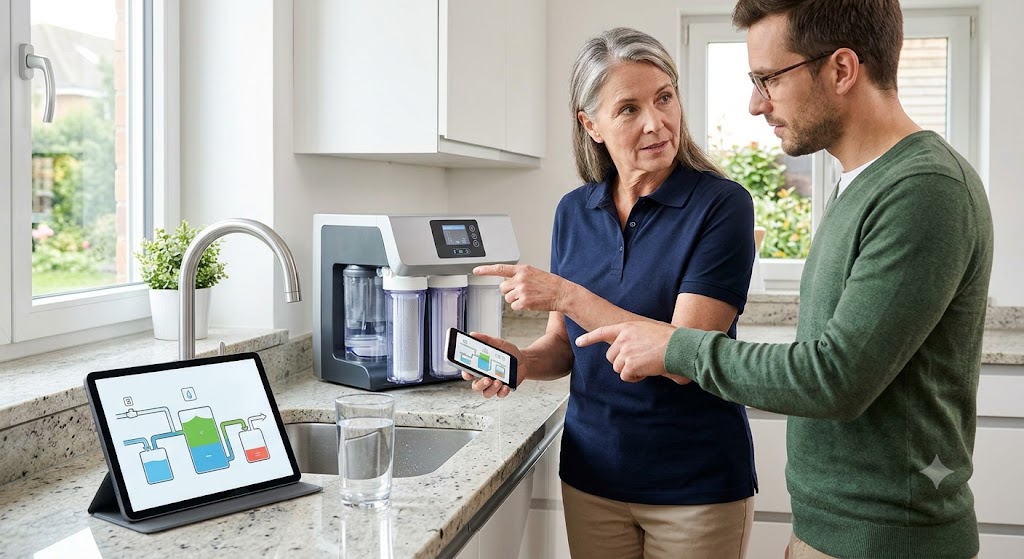
Buying a water treatment system can feel a bit like shopping for a new phone. Every product promises better performance, the technical details start to blur together, and the more you compare, the harder it becomes to decide what you actually need. Meanwhile, the water at home still tastes odd, leaves stains on the sink, or seems to be causing trouble with your appliances.
Here’s the thing: the best water treatment system isn’t necessarily the most expensive one. It’s the one that solves your particular problem without adding unnecessary costs or maintenance headaches.
Every household has different needs. Some homes deal with mineral-heavy groundwater, while others receive treated municipal water that picks up problems along the way through ageing plumbing or storage tanks. Understanding these differences makes it much easier to choose a sensible solution.
Start With the Water You Already Have
Before comparing filtration brands, take a moment to understand your existing water supply. Is it provided by a municipal authority, delivered by a tanker, or drawn from a borewell or private well? The answer matters because each source can have different quality concerns.
Municipal water is generally treated and monitored, but household plumbing, building storage tanks, and distribution problems can still affect what reaches your tap. Groundwater may contain naturally occurring minerals, dissolved metals, or microorganisms depending on local conditions.
Pay attention to the symptoms you notice. White deposits on bathroom fittings may point towards hardness. Orange stains could indicate iron, while a sudden change in taste or smell might warrant further investigation. These observations are useful starting points, but they can’t confirm whether water is safe to drink.
When safety is uncertain, arrange appropriate testing through a qualified laboratory or contact your water supplier. The right tests depend on your source and local risks. For a private borewell, for example, the recommended checks may differ from those for a municipal connection.
Knowing what you’re dealing with saves time and prevents you from buying a system simply because its advertising sounds convincing.
Why Testing Should Come Before Buying
A water treatment system can only do its job if it’s designed to address the problem at hand. That’s why a test result is often more useful than a long list of product features.
Depending on your water source, testing may cover hardness, pH, iron, nitrate, fluoride, microbial contamination, or other relevant substances. You don’t necessarily need every possible test. A qualified laboratory can help determine which measurements are appropriate.
Consider a family whose kettle develops thick mineral deposits every few weeks. A hardness test may show that a softener could help manage the problem. Another household might have water that tastes unpleasant because of chlorine, in which case a suitable activated carbon filter could be a more practical choice.
These are very different situations, even though both homeowners might initially search for a general water purifier.
Testing also matters because clear water isn’t always safe water. Some contaminants cannot be detected by sight, smell, or taste. If you suspect a health-related issue, don’t rely on appearance or a basic demonstration test to make the final decision.
Choosing a System That Fits Your Needs
Once you understand the water quality issue, you can compare treatment options with greater confidence. The goal is to find right-sized recommendations that reflect your household’s actual needs rather than a salesperson’s preferred product.
Activated carbon filters are commonly used to improve taste and reduce chlorine and certain organic compounds. Sediment filters capture suspended particles such as sand and rust. Water softeners reduce calcium and magnesium, helping limit scale buildup on fixtures and appliances.
Reverse osmosis systems can reduce many dissolved substances, depending on their design and tested performance. Ultraviolet treatment can inactivate many harmful microorganisms, but it doesn’t remove dissolved chemicals or metals.
Each technology has limitations. A carbon filter shouldn’t automatically be assumed to remove every dissolved contaminant, and a water softener isn’t a substitute for disinfection. Some households may need a combination of methods, while others can get by with a simpler system.
Check independent certifications and product specifications for the specific contaminant you need to reduce. Broad claims such as “complete purification” aren’t enough on their own. Look for evidence that the equipment has been tested for the job you’re asking it to do.
Think About Household Size and Daily Use
A system that works well for a couple living in a small apartment may not be ideal for a large family with several bathrooms and heavy daily water use. Capacity matters, particularly when choosing a softener or a whole-house treatment system.
Start by considering how much treated water your household actually needs. Is your main concern drinking and cooking water, or do you want to treat water used for showers, laundry, and cleaning as well?
A point-of-use filter installed under the kitchen sink may be enough if the concern relates only to drinking water. A whole-house system may make more sense when a confirmed problem affects the entire supply, such as severe hardness or sediment.
Your water budget should include more than the purchase price. Think about installation, replacement cartridges, electricity, wastewater where applicable, and regular servicing. A system with a low upfront cost can become expensive if its consumables are difficult to find or need frequent replacement.
Before committing, ask the supplier for realistic maintenance costs and the expected replacement schedule. It’s much easier to make a sound decision when you understand the long-term expense.
Don’t Forget Installation and Maintenance
Even good equipment can perform poorly when it’s installed incorrectly or neglected. Filters may clog, cartridges lose effectiveness, and disinfection systems need proper maintenance to continue working as intended.
Check whether installation requires changes to existing plumbing, a drainage connection, or electrical power. If the setup is complicated, use a qualified professional and ask for clear instructions on routine care.
Replacement filters should be compatible with the system and changed according to the manufacturer’s guidance. Avoid stretching a cartridge’s life simply to save a little money. Equally, don’t replace components unnecessarily without checking the recommended schedule and actual usage.
Storage tanks deserve attention too. If water is stored before reaching the tap, poor cleaning practices or a damaged tank can introduce problems that a kitchen filter may not fully address.
Keep records of servicing and water test results. These small habits make it easier to spot recurring issues and check whether the treatment system is doing what it was installed to do.
Be Careful With Impressive Sales Claims
Water treatment products are often marketed using dramatic demonstrations, complicated terminology, and promises of exceptional purity. Some technologies are genuinely effective, but a demonstration alone doesn’t establish that water is contaminated or that a particular system is necessary.
Ask for the actual test results, independent performance certification, and details about the contaminants the system can reduce. If a salesperson claims that your water is unsafe, request evidence rather than making an immediate purchase out of concern.
Be especially cautious of anyone promising that one device removes every possible contaminant. Water chemistry is complicated, and treatment depends on the substance, its concentration, and the system’s design.
A Better Fit Makes All the Difference
Choosing a water treatment system doesn’t need to be a guessing game. Start with your water source, investigate any concerns, and use appropriate testing to identify the problem. Then compare solutions based on proven performance, household needs, maintenance requirements, and total cost.
Sometimes the answer is a simple filter. In other cases, a specialised system or professional assessment may be necessary. The important thing is to match the solution to the evidence rather than paying for features you don’t need.
Good water management isn’t about buying the biggest system on the market. It’s about making a thoughtful choice, maintaining it properly, and knowing why it belongs in your home. That’s how you get better value, fewer surprises, and greater confidence in the water your household uses every day.